
Large digital displays are no longer limited to showing a single advertisement or predesigned visual. As businesses, venues, retailers and media operators need to respond quickly to changing information, real-time content management has become an important part of professional display systems. A properly designed LED screen can provide a large visual platform while control systems determine what content is displayed, when it changes and how different sources are presented.
At Coblinks, we manufacture professional LED display solutions for indoor and outdoor applications. We understand that the display hardware is only one part of a complete visual communication system. Content management also depends on appropriate controllers, signal transmission, screen configuration and the requirements of the installation environment.
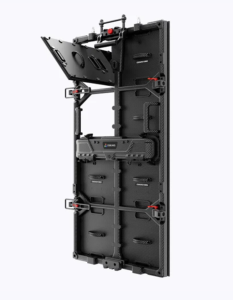
An LED Screen Connects Dynamic Content With Large Visual Spaces
A large LED screen is built from multiple display modules or cabinets that work together as one visual surface. This modular structure allows manufacturers to create displays in different sizes and configurations according to project requirements.
For content management, the control system receives visual information from a media source and distributes the appropriate data to the display. Professional LED control platforms can also configure receiving cards and manage multiple display areas. For example, NovaStar documentation describes systems that can send configuration information to all receiving cards or selected receiving cards, helping operators configure complex LED display structures efficiently.
This architecture is particularly important when a large LED screen display contains thousands or millions of pixels. The physical screen provides the visual output, while the control system manages how content reaches different sections of the display.
LED Screen Display Supports Flexible Content Changes
Real-time content management becomes valuable when information needs to change frequently. Advertising campaigns, event schedules, live video, announcements and operational information may all require different content at different times.
Modern LED control solutions can receive content from computers and other sources and distribute it to the display. Some systems also support networked or cloud-based management. Some asynchronous control systems allow users to publish and manage LED displays through computers, mobile phones, or tablets, while also supporting cloud-based publishing and monitoring.
For a large LED screen display, this capability can make content operations more efficient. Instead of physically modifying the display, operators can update the digital content through the relevant control infrastructure. This is useful for commercial advertising, transportation environments, corporate communication and other applications where information changes throughout the day.
How Control Systems Help Manage Large Displays
The management process generally involves several connected components. A content source provides the video or image information. A controller processes or distributes that information, while sending and receiving equipment transmits the data to the LED cabinets.
The control system also needs to understand the physical configuration of the display. Different cabinet arrangements can require different mappings and configurations. Professional LED control software therefore provides functions for screen connection, multi-screen management, brightness adjustment and other operational settings.Our training resources specifically cover screen connection and multi-screen management as part of professional LED display operation.
For large installations, these functions help ensure that content is displayed in the correct position and that multiple sections operate as one coordinated visual system.
Choosing the Right LED Screen Display for Content Management
Content management capabilities cannot compensate for an unsuitable display. The physical characteristics of the LED screen display should match the application, viewing distance, installation environment and content requirements.
Our Coblinks product range includes indoor and outdoor LED display solutions with different pixel pitches and structural designs. The MD Series, for example, offers indoor pixel pitches from 1.9 mm to 3.9 mm and outdoor pixel pitches from 2.9 mm to 4.8 mm. Its product design includes front and rear maintenance, a lightweight magnesium alloy frame and options for irregular-shaped splicing.
For indoor applications, our MC Series is available in pixel pitches from 1.25 mm to 3.9 mm and offers multiple cabinet sizes that can be mixed and matched. The product also supports front and rear maintenance and optional dual backup for receiving cards and power supplies in applications such as studios and stations.
These hardware characteristics can influence how effectively operators deploy and maintain the overall display system.
Why Coblinks Focuses on Custom LED Solutions
Coblinks manufactures professional LED displays for fixed installation, rental applications, and customized projects. Established in 2017, the company operates a 5,000-square-meter production facility and provides OEM and ODM services for overseas rental companies, system integrators, and other professional customers. Its product range covers indoor, outdoor, creative, and rental LED display solutions, supported by professional engineering and quality management.
For projects involving a large LED screen, Coblinks helps customers select and customize display hardware based on application requirements. The displays can be integrated with the customer’s preferred controllers, signal systems, and content management platforms. By combining manufacturing capabilities with project support, Coblinks provides LED display solutions designed to meet different installation, content, and operational requirements.