
Every major game brings thousands of spectators into the same physical space, creating valuable opportunities for brands and commercial partners. Sponsors, teams, venue operators, and advertisers all rely on the stadium environment to reach and engage these audiences. In this environment, an LED screen can turn advertising space into dynamic digital media that changes with the event, audience and sponsorship schedule. At Coblinks, we design and manufacture professional LED display solutions for applications that require strong visual performance, flexible configurations and dependable operation.
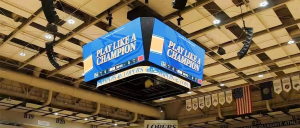
Why Stadiums Need LED Screen Display Advertising Systems
Traditional printed signs provide fixed messages, while a digital LED screen display can show videos, graphics, statistics, sponsor messages and event information through one visual platform. This flexibility allows stadium operators to change advertising content according to different matches, sponsors or time periods.
Stadium advertising can also appear in several locations. Large central screens can provide high visibility to spectators, while perimeter displays and ribbon boards can deliver repeated sponsor exposure around the playing field. Digital signage may also be positioned at entrances, concourses, fan zones and commercial areas. These different placements allow advertising systems to communicate with audiences throughout their stadium journey.
For advertisers, the value goes beyond screen size. Dynamic content can make promotional messages more noticeable and provide opportunities for different campaigns to run on the same physical display. For stadium operators, the same infrastructure can combine advertising with match information and audience engagement.
How an LED Screen Works in Stadium Advertising
A stadium advertising system normally involves more than the physical display itself. Content needs to be prepared, scheduled and distributed to the appropriate screens. Depending on the venue design, several displays can operate as an integrated network so that different areas show coordinated content.
For example, a sponsor advertisement may appear on perimeter screens during a particular period, followed by team information or match statistics. During halftime, the content can switch to another sponsor campaign. This type of centralized content management gives venue operators greater control over their advertising inventory. Digital signage platforms can support centralized scheduling and updating across multiple displays.
The physical characteristics of the LED screen display are equally important. Stadiums may expose outdoor displays to direct sunlight, changing weather conditions and long operating periods. Therefore, brightness, structural design, maintenance access, signal stability and appropriate pixel density should be considered during system planning. We specifically address these challenges when developing LED solutions for large venues. For stadium applications, we consider brightness, thermal management, signal reliability, viewing distance, and pixel density during product selection and project planning.
Choosing the Right LED Screen Display for a Stadium
Screen placement, viewing distance, content format, weather exposure, and installation conditions all need to be considered before choosing an LED display for a stadium. A screen positioned along the sidelines, for example, may have very different requirements from a large outdoor display mounted high above the seating area.
For outdoor applications, our MD Series is one example of how we approach demanding display environments. The series supports indoor pixel pitches of 1.9mm, 2.6mm, 2.9mm and 3.9mm, while outdoor options include 2.9mm, 3.9mm and 4.8mm. Its design includes front and back maintenance, a foldable wind-resistant frame, corner protection and irregular-shaped splicing. The 500mm × 500mm panel weighs as little as 6.7kg, while the 500mm × 1000mm panel weighs as little as 9.8kg. These characteristics can help professional customers develop configurations according to different project requirements.
For a stadium, the best LED screen is therefore not necessarily the largest one. Screen dimensions, pixel pitch and viewing distance should be evaluated together. A display viewed from far away may require a different configuration from a screen positioned close to spectators.
How Coblinks Supports Stadium Display Projects
Project requirements can vary considerably in terms of size, design, application, and installation. A standard display may not always be the right fit. Coblinks combines in-house LED display manufacturing and technological R&D with OEM and ODM capabilities, giving overseas partners the option to develop customized products around their specific project requirements.
Our solutions cover rental, fixed installation and creative applications, while our engineering team provides technical support, customization and project-oriented assistance. We also maintain after-sales support capabilities for customers in overseas markets.
Importantly, we are a manufacturer and supplier rather than a stadium advertising or screen rental operator. We provide customized LED products to professional customers, including overseas rental companies and other display solution providers. This model allows our partners to integrate our products into their own stadium, event and commercial display projects.
Building More Valuable Stadium Advertising Systems
A modern LED screen display can serve several functions at once. It can communicate match information, entertain spectators, strengthen sponsor visibility and create flexible digital advertising inventory. When the hardware is correctly matched with viewing conditions, environmental requirements and content management systems, stadium operators can build a more adaptable visual communication environment.
Reliability, customization, and real project requirements remain central to the development of our LED display products. For stadium advertising applications, choosing the right LED screen is ultimately about balancing visual impact with technical performance, installation requirements and long-term operational needs. The right LED manufacturing partner brings together display technology and project experience to meet the demanding viewing, installation, and operational requirements of modern sports venues.