
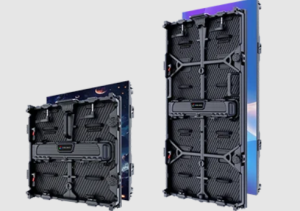
In modern visual communication systems, high brightness imaging is achieved through precise control of LED clusters, driving circuits, and pixel-level calibration. Coblinks focuses on engineering solutions that integrate stable electrical architecture with optimized optical output. In our production process, each LED screen is designed to maintain consistent luminous efficiency under different ambient lighting conditions. The structure of a LED display board relies on controlled current distribution and heat dissipation to ensure that light output remains uniform across the entire surface. By balancing signal processing and physical design, we support clearer image rendering for commercial and industrial environments where visibility is essential. These principles are also foundational in LED screen deployment across varied installation scenarios. We also refine thermal control.
Brightness Control Architecture
In our system design, brightness performance is governed by the coordination between driver ICs, refresh rate settings, and pixel density configuration. Coblinks applies structured calibration methods to ensure that each module performs within stable electrical parameters during operation. A LED screen achieves high brightness by increasing luminous efficiency while maintaining controlled power consumption, which helps reduce uneven light distribution in large installations. At the same time, a LED display board depends on optimized grayscale management and signal synchronization to deliver clear visual output under strong ambient light conditions. We also integrate modular testing procedures before assembly to verify consistency across production batches. This approach allows us to maintain stable visual performance in both indoor and outdoor environments where lighting conditions change frequently.
Signal and Optical Efficiency Design
In practical applications, signal transmission stability and optical efficiency directly influence image brightness and clarity. Coblinks designs each LED screen with attention to PCB layout optimization and stable power routing, ensuring that energy loss is minimized during operation. The LED display board utilizes fine-pitch LED arrangement and advanced driving algorithms to enhance pixel response speed and maintain consistent brightness across the viewing angle. In addition, a LED screen benefits from improved heat dissipation structures that support continuous high-load operation in commercial environments. A LED display board also integrates synchronized control systems that help maintain stable image output during rapid content changes. Through these engineering approaches, we focus on delivering predictable performance rather than short-term visual effects. especially in LED installations.
Conclusion
In summary, high brightness image creation in modern LED systems is achieved through coordinated control of current regulation, optical design, and thermal stability. Coblinks develops its solutions by focusing on consistent engineering processes that support stable light output across different usage conditions. A LED screen achieves visible brightness by combining efficient LED chips with precise driving control, while a LED display board further refines image uniformity through calibration and synchronized signal management. These elements work together to ensure that visual output remains clear under varying ambient lighting conditions. Our approach emphasizes practical system reliability and structured manufacturing rather than isolated component performance, which is important for commercial display applications where stability and consistency are required. We continuously refine LED imaging systems.