
Navigating the complex landscape of digital display technology requires a clear understanding of your specific project goals and environmental conditions. Buyers often face an overwhelming array of technical specifications, from pixel pitches to cabinet materials, making the selection process challenging. Selecting an inappropriate LED display LED display configuration can lead to poor visibility, high power costs, or premature equipment failure.
Our team focuses on simplifying this decision-making process by custom-manufacturing hardware tailored to your specific requirements. We believe that a successful installation begins with thorough technical alignment and careful component selection. Let us explore the critical parameters that must be evaluated to identify the ideal visual solution for your next project.
Deciding Between Indoor and Outdoor Configurations
The environment in which your display operates dictates the fundamental design, brightness level, and protective ratings of the hardware. Outdoor environments present harsh challenges such as direct sunlight, wind, dust, and heavy rain, which require high-ingress protection ratings. Conversely, indoor setups focus heavily on high resolution, quiet cooling systems, and close-up viewing comfort.
We build distinct systems to address these contrasting environmental needs without compromising on image quality. At Coblinks, our outdoor LED display solutions are designed for different environmental conditions, while our indoor panels focus on fine pixel pitch applications. Choosing a dedicated LED screen rated specifically for your venue prevents damage and guarantees proper visibility under local lighting conditions.
Selecting the Ideal Aspect Ratio and Cabinet Size
Traditional video content is universally produced in a standard 16:9 widescreen format to match modern broadcasting standards. If a display setup uses non-standard physical dimensions, content creators must stretch or crop their videos, resulting in distorted images. Selecting cabinets that naturally assemble into standard aspect ratios simplifies media production and reduces editing overhead.
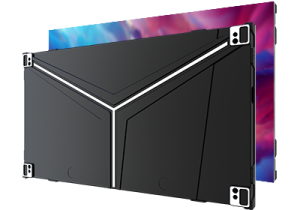
Our engineers focus on standardizing cabinet dimensions to streamline your content delivery pipelines. Our TC Series features a creative 16:9 slim display designed specifically for modern, high-impact visual indoor installations. At Coblinks, this specific form factor allows integration teams to build standard widescreen displays easily without complex scaling processors.
Analyzing Pixel Pitch for Optimal Viewing Distance
Pixel pitch refers to the distance between the centers of two adjacent pixels, directly influencing the minimum viewing distance. A tighter pitch delivers higher resolution and allows audiences to stand closer to the screen without noticing individual diodes. However, using an ultra-fine pitch for a distant outdoor billboard unnecessarily increases costs without improving perceived visual quality.
We guide our clients to balance pixel density and budget based on where the audience will stand. At Coblinks, we manufacture a wide range of pixel pitches to fit everything from close-range control rooms to distant stadium boards. Matching the pitch of your LED display LED display to your actual viewing distance saves resources while delivering a crisp picture.
Evaluating Structural Depth and Installation Constraints
Physical venue limitations often dictate the maximum thickness and weight of the display panels you can safely install. Heavy cabinets require complex, expensive steel mounting frames, which might not be supported by standard drywall or temporary event trusses. Slim, lightweight profiles reduce structural loads and allow for quick, clean installations in tight spaces.
Our design philosophy prioritizes mechanical efficiency to make handling and mounting as simple as possible. Our TC Series utilizes an ultra-thin cabinet profile that minimizes space requirements and blends naturally with flat wall surfaces. This slim design allows integration teams to mount LED screens in narrow corridors or corporate lobbies without obstructing pedestrian traffic.
Assessing Refresh Rates for Camera Compatibility
If your display will be filmed or broadcasted on television, you must pay close attention to the refresh frequency. Standard displays can produce flickering scan lines when viewed through a digital camera lens, which ruins the recorded footage. Utilizing high-frequency driver chips prevents this visual interference, preserving image stability for broadcast audiences.
We select suitable components and optimize display performance to support high refresh rate requirements. At Coblinks, we test display performance to ensure stable image quality for applications such as events and broadcasting. This specialized engineering allows event organizers to broadcast their stage setups smoothly without experiencing annoying horizontal lines.
Understanding Power Efficiency and Thermal Management
Continuous display operation can generate significant heat, which degrades electronic components and increases energy bills over time. Selecting hardware designed with efficient power routing and smart heat dissipation keeps operating temperatures low. This proactive design choice extends the operational lifespan of the diodes and preserves color consistency.
Our SMT manufacturing lines focus on optimizing power distribution to reduce waste heat across all panels. At Coblinks, we run every custom batch through a 72-hour aging test to verify long-term thermal stability. Investing in energy-efficient LED screens helps keep operational costs low while preventing color shifts caused by thermal stress.
Conclusion
Finding the ideal visual display requires careful evaluation of environmental demands, viewing distances, and structural requirements. By balancing pixel pitch with audience proximity and choosing appropriate aspect ratios, you can build a highly effective digital space. Our team remains committed to manufacturing precise, customized visual hardware that supports our global partners in delivering exceptional visual experiences.