
In industrial and commercial environments, selecting a visual system requires more than focusing on display appearance. At Coblinks, we evaluate how a LED screen will operate within real workflows, including control systems, signal flow, and long-term stability requirements. A LED screen is typically part of a broader communication architecture, so early planning must consider integration with existing infrastructure such as PLC-based control units and content management systems. We also assess whether a LED screen will be used for continuous monitoring, scheduled broadcasting, or interactive information display.
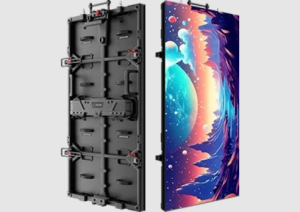
System Compatibility and Signal Integration
At Coblinks, system matching is a core step when advising clients. A LED screen must work smoothly with signal processors, industrial controllers, and data sources without latency or visual disruption. In many projects, we evaluate whether the LED screen supports required input formats and refresh rates to ensure stable performance in control rooms or commercial environments. Compatibility with AC/DC power distribution and network-based control systems is also reviewed. When a LED screen is integrated into a multi-device setup, we focus on ensuring that synchronization remains stable even under continuous operation. We also check how the LED screen handles signal switching between different sources, especially in environments where multiple data streams are displayed in parallel. This helps reduce the risk of image delay or frame mismatch during real-time operation.
Environmental and Structural Considerations
The installation environment directly affects long-term performance. Coblinks engineers analyze temperature variation, humidity, and structural load before recommending any LED screen configuration. For outdoor applications, protection against dust and water exposure is essential, while indoor installations prioritize pixel density and viewing comfort. A LED screen must also align with mounting conditions, whether embedded into walls, suspended structures, or modular rental frames. Maintenance access is another key factor, as service efficiency can significantly influence operational downtime over the product lifecycle. In addition, we consider airflow space and heat dissipation paths to ensure the LED screen can maintain stable operation during long hours of continuous use.
Conclusion
Selecting a display solution requires balancing technical performance, environmental conditions, and system integration needs. At Coblinks, we support clients in evaluating each LED screen based on its operational role rather than only its visual output. A properly configured LED screen ensures stable communication performance and predictable maintenance planning across different industrial scenarios. By combining engineering analysis with practical deployment experience, we help ensure that each installation delivers consistent functionality within its intended application environment.