
Stage production involves much more than putting a bright display behind performers. Rental crews have to consider transportation, installation time, outdoor conditions, viewing distance, content type, and repeated handling across different venues. That makes an LED screen for stage rental a technical system rather than a simple visual backdrop. At Coblinks, we see that many purchasing assumptions come from specifications being viewed in isolation, so separating common myths from practical considerations can make rental planning far more reliable.
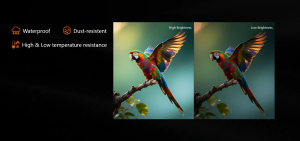
Myth: Higher Brightness Always Means Better Outdoor Performance
Brightness often dominates discussions about outdoor production, especially at daytime festivals and open-air events. But higher numbers do not always mean clearer images. What viewers actually see depends on ambient light, surface reflection, contrast, pixel pitch, camera exposure, and where the audience is standing. An LED screen for stage rental must be judged on these combined factors.
A display with strong contrast can preserve dark details more effectively than a system that simply pushes brightness upward. Content itself matters too. Large areas of white or highly saturated colors behave differently from darker graphics, video footage, or stage visuals containing fine details.
Sunlight also changes throughout a performance. A screen that appears highly visible during an afternoon setup may behave differently as the sun moves across the venue. Rental planning should account for the entire operating period rather than judging outdoor performance from a single lighting condition.
Myth: Rental Displays Only Need to be Lightweight
Lower weight is certainly valuable, but portability represents only one part of a rental display’s practical performance. Cabinets also need suitable mechanical connections, stable power and signal interfaces, accessible service points, and a structure that can tolerate repeated assembly. Ignoring these factors can result in delays or damage during repeated setups, even if the cabinet itself is easy to lift.
The physical design becomes especially important during touring work. Panels may be loaded into cases, transported between venues, installed at different heights, removed after a show, and prepared for the next location. A lightweight cabinet that lacks practical handling features can still create unnecessary work.
A Stage LED Screen should also fit the production’s installation method. Ground-supported structures, hanging systems, curved arrangements, and temporary stage frames impose different requirements. The display cannot be evaluated independently from the structure carrying it.
Myth: Weather Protection is Only about Rain
Rain is an obvious concern at outdoor events, but moisture represents only one environmental challenge. Dust, airborne particles, direct sunlight, temperature fluctuations, and repeated exposure to changing conditions can all affect display operation and long-term reliability. These factors often interact, so addressing only one of them may leave the display vulnerable to another.
Our Coblinks MB-H Series illustrates how several of these factors can be addressed through display construction. It uses flip-chip GOB technology with a high-brightness fine-pitch design for outdoor visual performance, while its surface construction is intended to withstand rain and dust. The inverted chip arrangement also reduces the obstruction associated with traditional support brackets, helping maintain visibility under harsh sunlight.
For a Stage LED Screen, environmental protection should still be considered together with the venue itself. An outdoor screen positioned near a dusty road, seaside location, or temporary construction area may face different operating conditions from one used at a sheltered festival site. Installation planning, storage, inspection, and cleaning remain important regardless of the display’s protection rating.
Myth: Pixel Pitch Alone Determines Image Quality
Pixel pitch is frequently treated as the quickest way to compare rental displays, but it does not tell the entire story. The appropriate pitch depends on viewing distance, screen dimensions, content resolution, camera usage, and the visual role of the display within the stage design.
A very fine pitch can provide greater pixel density at close range, yet it may not offer meaningful advantages if the audience is positioned far from the screen. Conversely, a pitch selected without considering nearby viewers can make fine graphics and facial details appear less refined.
Processing also influences what viewers see. Refresh rate, grayscale performance, color reproduction, receiving-card architecture, and camera compatibility can all affect live content. A sensible specification review considers these elements together instead of reducing image quality to one number.
Conclusion
Rental production rewards systems that perform consistently across many practical situations, not equipment selected from a single impressive specification. The right display needs to balance brightness with contrast, portability with mechanical durability, environmental protection with service access, and pixel density with actual viewing conditions. Those relationships matter far more than any isolated marketing claim.
Our team at Coblinks approaches an LED screen for stage rental from that broader perspective, considering how the equipment fits into transportation, setup, live operation, and teardown. A carefully matched Stage LED Screen can support demanding visual content without creating unnecessary complexity behind the scenes. Once these myths are set aside, rental teams can assess display technology according to the realities of the production rather than relying on specifications that look impressive on paper.