
Outdoor advertising has become increasingly measurable as screens, audience data, campaign schedules, and location insights work together. Instead of treating an advertising surface as a fixed space with a single message, marketers can examine how timing, placement, creative content, and audience conditions influence performance. At Coblinks, we view electronic billboard advertising as part of a wider data-driven communication process, where technology provides more variables for planning while human judgment remains essential.
Turning Location Data into Media Decisions
Location is one of the most useful data points in outdoor advertising because exposure depends heavily on where a screen is installed. Traffic volume, pedestrian density, nearby commercial areas, road direction, and typical dwell time can all influence how an advertisement is perceived. A screen beside a busy intersection, for instance, may serve a very different audience from one positioned inside a shopping district.
Historical traffic information can add another layer of context. Rather than relying solely on estimated daily impressions, marketers can compare audience patterns across weekdays, weekends, holidays, and different parts of the day. These variations help determine whether particular campaigns should prioritize morning commuters, lunchtime visitors, evening shoppers, or broader public exposure.
Geographic data can also support media planning across multiple digital billboards. Marketers may divide locations according to audience characteristics or commercial objectives, then assign different creative assets to each group. Such segmentation allows outdoor campaigns to reflect local conditions instead of presenting identical messaging across every location.
Using Time and Audience Patterns
Time is another variable that can significantly change the value of an advertising impression. A campaign promoting breakfast products may have limited relevance late at night, while entertainment promotions could become more useful as evening traffic increases. Scheduling content according to audience activity gives advertisers a way to connect message timing with consumer routines.
Daypart analysis can reveal patterns that are difficult to recognize from overall campaign figures. If impressions remain relatively stable but engagement-related outcomes vary sharply between time periods, marketers may discover that the timing of a message matters as much as its location. This information can guide later scheduling decisions without requiring changes to the physical installation.
Real-time information can also influence electronic billboard advertising. Weather, traffic conditions, local events, store hours, and inventory availability may affect which message is most relevant at a particular moment. A carefully structured content system can accommodate these variables while maintaining brand consistency across the campaign.
Measuring Creative Performance
Data becomes more useful when marketers know which elements they are trying to evaluate. A campaign might compare different headlines, product images, color treatments, message lengths, or calls to action. Without clearly defined variables, performance data can show that one advertisement worked better without explaining why.
Creative testing should account for exposure conditions as well. A message viewed by drivers for only a few seconds needs a different communication structure from content encountered by pedestrians who can remain nearby for several minutes. Font size, visual hierarchy, message density, and motion all influence how quickly information can be processed.
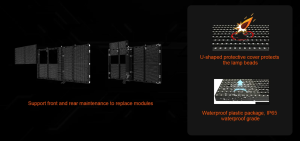
The physical screen also affects what creative teams can reasonably achieve. The SL Series, for example, combines a lightweight precision aluminum die-cast cabinet with a transparency ratio of up to 55%, while its slim construction is designed to occupy less installation space. It also uses IP65 protection and heat-dissipation performance suited to varied application environments. At Coblinks, we consider these physical characteristics alongside content requirements rather than separating hardware from campaign planning.
Connecting Data with Campaign Optimization
Campaign data becomes more valuable when it can inform adjustments rather than simply describe past performance. Marketers can review exposure patterns, scheduling results, creative variations, and location-level outcomes to identify areas that deserve further testing. This creates a feedback loop in which each campaign can contribute information to the next one.
Frequency is particularly important. Repeating a message may increase familiarity, yet excessive repetition can make an advertisement less noticeable. Data from different locations and time periods can help marketers compare exposure frequency with campaign objectives and determine whether additional screen time is likely to add value.
Cross-channel measurement can provide an even broader perspective. Outdoor exposure may work alongside search, social media, retail visits, or website traffic rather than operating independently. A campaign that uses digital billboards can be evaluated through a wider set of indicators, allowing marketers to examine how physical visibility relates to activity across other channels.
Conclusion
Data does not make outdoor advertising effective by itself; its value comes from asking useful questions and interpreting the answers in context. Location, timing, creative performance, exposure frequency, and cross-channel activity can collectively reveal how audiences encounter a campaign and where adjustments may be worthwhile.
We at Coblinks approach digital billboards with this broader view, recognizing that physical display technology and campaign intelligence work best when they support one another. As measurement methods become more sophisticated, electronic billboard advertising can evolve from a static media placement into a more responsive communication channel shaped by evidence, experimentation, and real-world audience behavior.