
Static advertising still has a place in outdoor media, yet its fixed format can limit how often a message changes and how precisely advertisers respond to audience behavior. Modern LED billboards introduce a different model in which visual content can be updated digitally, scheduled around campaigns, and adapted to different time periods without replacing a physical print surface. At Coblinks, we see this shift as more than a move from one advertising format to another; it reflects how outdoor communication is becoming more flexible, measurable, and responsive.
From Fixed Messages to Dynamic Content
A printed billboard usually carries one visual concept until the physical artwork is replaced. That approach works for long-running campaigns, but it becomes less practical when brands need several messages within the same advertising space. LED billboards can rotate multiple pieces of content according to a predefined schedule, allowing one location to support a broader communication plan.
Time-sensitive advertising is another important factor. A restaurant may promote lunch during the morning, a retailer can highlight an evening promotion later in the day, and an event organizer may change messaging as a date approaches. Such scheduling gives advertisers more control over how a single screen is used throughout its operating hours.
Content variety also changes the economics of physical space. Rather than assigning one printed image to one campaign period, digital billboards can accommodate different advertisers or creative variations on the same display. This shared-use model can make high-traffic locations more adaptable to changing commercial requirements.
Visibility Across Changing Environments
Outdoor advertising has to compete with sunlight, distance, weather, traffic movement, and surrounding visual information. A static poster depends heavily on the original print and lighting conditions, whereas digital billboards can produce their own luminous image. Brightness becomes particularly important on roads and open spaces where daylight can substantially affect readability.
Visual clarity depends on more than brightness alone. Pixel pitch, viewing distance, screen dimensions, contrast, and content design interact with one another. A display positioned beside a highway may require a different specification from one installed in a pedestrian district because viewers encounter the content at different speeds and distances.
Refresh rate matters as well, particularly for advertising captured by smartphones or professional cameras. A sufficiently high refresh rate can reduce visible scanning artifacts in recorded footage, which becomes useful as outdoor campaigns increasingly appear on social platforms alongside their physical placement.
Architectural Integration and Space
The physical installation environment can determine whether a digital advertising project is practical. Heavy structures or bulky cabinets may create additional demands for buildings with strict load limitations, while transparent display technologies can offer alternative approaches for locations where maintaining visibility through the installation matters.
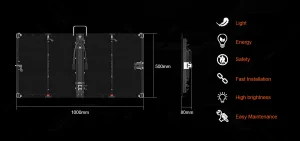
The SL Series demonstrates this concept through its precision aluminum die-cast frame, CNC-machined construction, and cabinet design focused on structural strength with relatively low weight. Its transparency ratio can reach 55%, while the slim structure occupies less installation space. At Coblinks, we develop such display approaches around varied installation conditions rather than treating every site as if it had identical structural requirements.
Transparency can be particularly useful on glass façades, commercial buildings, and architectural surfaces where completely blocking the background would affect the appearance of the property. A partially transparent display can combine advertising content with greater visual openness, creating a different relationship between the screen and the building behind it.
Operational Flexibility in Outdoor Media
Campaign management becomes more adaptable once content can be changed through digital control rather than physical replacement. Advertising teams can prepare several creative assets in advance, assign playback periods, and adjust messaging according to campaign schedules. The process also makes rapid responses more practical when promotions, events, or public information change unexpectedly.
Another advantage comes from creative testing. Different messages can be displayed at separate times, giving advertisers an opportunity to compare how audiences respond to different headlines, visuals, or calls to action. Although screen exposure does not automatically reveal every aspect of audience behavior, digital scheduling creates more variables for campaign planning than a single printed image.
Maintenance practices also influence operational continuity. Modular display construction can make individual components more accessible during service, while remote monitoring may help operators identify unusual operating conditions before dispatching technicians. These considerations become increasingly relevant as networks expand across multiple locations.
Conclusion
Outdoor advertising has changed because the message itself has changed: campaigns now move faster, contain more variations, and often need to respond to circumstances that did not exist when a printed poster was installed. The flexibility of LED billboards makes that shift possible while architectural display options broaden the range of locations where digital communication can be considered.
We at Coblinks believe the more useful question is not whether digital should replace static media in every situation, but how display technology can match the content, environment, and operating demands of each project. As advertisers continue to coordinate physical and digital campaigns, digital billboards offer a format built around change rather than permanence.