
As we at Coblinks work closely with commercial and retail operators, we see that modern shopping environments rely on structured visual communication to manage both customer attention and information delivery. In daily operations, a LED screen is commonly installed in open commercial zones to display promotional content, brand campaigns, and time-sensitive announcements. At the same time, a LED display large system is often used in central atriums or building façades to create a unified visual communication layer across multiple floors or zones. At Coblinks, we design these systems based on real usage scenarios such as pedestrian flow, viewing distance, and content update frequency rather than focusing only on isolated display specifications.
System Integration and Operational Control
We pay close attention to how display systems are integrated into commercial management platforms, especially in environments where content changes frequently. A LED screen in retail centers is usually connected to centralized control software, allowing operators to adjust advertising schedules, promotional content, and event information in real time. A LED display large is often deployed in synchronized configurations across multiple installation points to maintain consistent branding and visual coordination throughout the commercial space.
At Coblinks, we design system architecture with stable signal transmission paths and structured control logic that can support long operational cycles. Our engineering process also considers AC and DC power stability, installation environment constraints, and multi-angle visibility requirements. These factors are evaluated during planning to ensure that both small and large-scale deployments maintain stable performance in real operating conditions across different commercial infrastructures.
Space Planning and Customer Flow Design
In retail environments, display systems are also part of spatial planning and customer navigation strategies. We observe that operators use digital displays not only for advertising but also for guiding movement patterns within complex commercial layouts. A LED screen placed near decision points such as entrances or store intersections can help deliver targeted promotional content based on customer positioning. Meanwhile, a LED display large installation is often used as a visual landmark to help customers orient themselves within large shopping complexes or mixed-use developments.
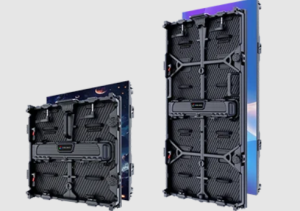
At Coblinks, we adopt modular design approaches that simplify maintenance and reduce operational disruption. This includes front-access service structures and standardized component layouts that allow technical teams to replace modules or control units efficiently. These design considerations help ensure continuous operation in high-traffic environments where downtime can directly affect commercial activity.
Conclusion
At Coblinks, we understand that retail and commercial centers use display systems as part of a broader operational framework rather than isolated visual tools. The effective application of a LED screen and a LED display large depends on how well they are integrated into content management systems, spatial design, and customer flow strategies across different commercial environments.
From an engineering perspective, we focus on system stability, installation adaptability, and maintenance efficiency to support long-term operation. By aligning display configuration with real commercial usage patterns, Coblinks helps operators maintain consistent communication performance while adapting to dynamic retail environments and multi-zone information delivery requirements across modern commercial infrastructures.