
A large screen does not automatically deliver a sharper image. The relationship between pixel pitch, viewing distance, resolution, and physical dimensions determines how convincingly detailed a visual appears. A 4K LED display may reproduce the same source resolution across very different cabinet configurations, yet the perceived image can change significantly as pixel spacing increases or decreases. At Coblinks, we view pixel pitch as one part of a broader display equation, alongside screen dimensions, content type, and the environment in which people actually watch the image.
Pixel Pitch and Physical Screen Dimensions
Pixel pitch describes the distance from the center of one LED pixel to the center of the next, normally expressed in millimeters. A smaller value places more pixels into a given area, while a larger value creates greater spacing. That difference directly affects how much detail can be reproduced across a fixed physical surface.
Screen size adds another layer to the calculation. A 4K source contains 3,840 × 2,160 pixels, but an LED wall does not necessarily use exactly that number of physical pixels. Its actual pixel matrix depends on cabinet dimensions and pixel pitch. As the pitch becomes finer, more pixels can fit within the same screen area, allowing the physical wall to represent detailed content with greater spatial precision.
For large-format installations, this relationship matters because viewers rarely judge resolution from a specification sheet alone. A screen viewed from several meters away can tolerate a wider pitch than one positioned close to a conference table. The appropriate configuration depends on how far people stand from the wall, how much text appears on screen, and whether the content contains fine graphics, faces, charts, or fast-moving imagery.
How Pixel Pitch Influences Image Clarity
Visual sharpness is closely tied to viewing distance. If individual pixels are easily distinguishable, a display can appear coarse even though the source material itself is high resolution. Increasing the distance between the viewer and the wall allows those individual light points to blend more naturally, making the overall image appear smoother.
A useful way to think about a Micro LED display is to separate physical pixel density from the resolution of the incoming content. Fine-pitch technology can create a dense physical matrix, but displaying 4K material does not automatically mean every physical pixel corresponds to a unique source pixel. Scaling processors may need to map the input image across the available LED matrix.
Text provides one of the clearest examples. Small fonts, thin lines, spreadsheet grids, and detailed interface elements expose limitations more readily than broad-color graphics. If the pitch is too wide for the intended viewing distance, edges can look less refined and tiny characters may lose definition. A properly matched 4K LED display configuration instead gives the source image enough physical detail to retain its intended visual character.
Matching 4K Content with Display Scale
Screen dimensions should be considered together with pixel pitch rather than treated as separate specifications. Two walls may both be described as 4K-capable, yet their physical pixel counts can differ because the panels use different pitches. The resulting scaling ratio affects how content is mapped and how much processing is required.
For example, a Micro LED display designed around a very fine pitch can accommodate a high pixel density within a relatively compact area. Larger installations may require a different balance, particularly if the audience is positioned farther away. In those situations, increasing the physical size of the wall can improve visibility without necessarily requiring the smallest available pitch.
Content production also deserves attention. Graphics created specifically for a 4K LED display should account for the actual canvas dimensions rather than simply relying on a generic 16:9 file. Native pixel mapping, aspect ratio, image scaling, and processor configuration all influence the final result. Content teams can reduce unwanted softness by preparing layouts around the actual LED wall rather than treating the display as an ordinary television.
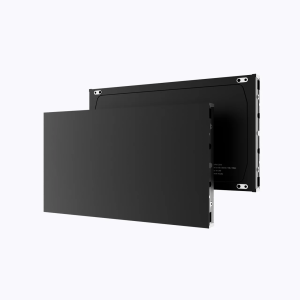
At Coblinks, we approach these decisions by considering the relationship between pixel density and the installation environment. The CM-C Series, for example, is offered with pixel pitches from 1.25 mm to 3.91 mm, allowing different density levels to address different viewing conditions. Its cabinet options include 500 × 1000 mm, 500 × 500 mm, 500 × 250 mm, and 250 × 500 mm formats, while the specifications include a refresh rate of 7680 Hz. These details illustrate why pixel pitch should be evaluated together with cabinet geometry rather than viewed as an isolated number.
Conclusion
Pixel pitch influences much more than the apparent sharpness of an LED wall. It affects physical pixel density, viewing distance, content scaling, text legibility, and the practical size of a high-resolution installation. A Micro LED display can provide extremely dense pixel arrangements, while a carefully selected larger pitch may remain visually effective in environments where viewers stand farther away.
The key is to match the physical characteristics of the wall with the way its content will actually be seen. At Coblinks, we treat the 4K LED display specification as part of that larger relationship, using pixel pitch, screen dimensions, content requirements, and viewing conditions together to develop a more informed display configuration.