
A 4K source can contain an enormous amount of visual information, but the screen must be capable of presenting that information at an appropriate scale. In a retail showroom, corporate auditorium, studio, or immersive space, the relationship between source resolution, screen dimensions, viewing distance, and image processing determines whether those details remain convincing.
We at Coblinks treat 4K compatibility as a broader display-planning question rather than a label attached to a panel. The best indoor LED display wall is the one whose physical and electronic characteristics correspond with the content being shown.
Understanding 4K Resolution at Different Screen Sizes
4K commonly refers to a horizontal resolution of around 3,840 pixels for UHD content. That figure describes the source, not the physical dimensions of the display itself. An LED wall can reproduce a 4K signal while using a different native pixel matrix, meaning image processing and scaling become important parts of the system.
Screen size changes the relationship between resolution and perceived detail. A relatively compact wall may display 4K material with considerable pixel density, while a much larger surface spreads the same source information across more physical space. If viewers stand close to the larger installation, individual pixel structure can become more noticeable.
Viewing distance provides another useful reference. A screen viewed from several meters away may not reveal the same level of pixel detail as one positioned directly beside a presentation area. For that reason, the indoor LED display specification should be considered alongside the audience layout, physical screen size, content resolution, and typical viewing distance.
Pixel Pitch and Image Scaling
Pixel pitch describes the distance between neighboring LED pixels and directly affects the native pixel density of a display. Smaller pitch values place more pixels across a given area, which can be beneficial when detailed 4K material is viewed from relatively short distances.
Scaling deserves equal attention because source resolution and screen resolution do not always correspond exactly. A processor may need to resize content to fit the LED wall’s native pixel matrix. High-quality scaling can preserve edges, text, and image proportions more effectively, while poorly matched formats may introduce softness or unwanted artifacts.
Content composition can also determine how much detail is actually visible. A cinematic scene with subtle textures places different demands on the display from a presentation containing large charts and headlines. The best indoor LED display wall for one application may not be the most appropriate configuration for another, even if both projects use identical 4K source material.
Display Technology and Visual Processing
Pixel density alone cannot describe the full image experience. Grayscale processing influences how smoothly a display reproduces shadows and gradients, while current control affects the consistency of light output between individual LED elements. Refresh behavior can become particularly important when fast-moving video or camera footage forms part of the content.
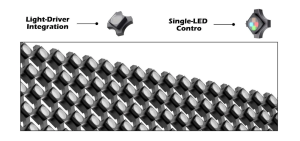
Our TH-P3.125 Series provides a specific example of this broader approach. The model incorporates integrated light-driver technology with static scanning, equal horizontal and vertical pixel pitch, and 16-bit grayscale processing. These characteristics support stable image presentation and nuanced tonal reproduction, which can be useful when high-resolution content contains fine gradients, dark scenes, or detailed visual transitions.
Signal infrastructure should also be considered. A 4K workflow may involve media servers, processors, switching equipment, transmission systems, and multiple input sources. Each component needs to support the required resolution, refresh behavior, and signal format. The display itself is only one part of the imaging chain.
Matching Content with the Viewing Environment
The physical environment often determines whether the advantages of high-resolution content can actually be perceived. Ambient light, reflective surfaces, audience movement, screen height, and viewing angles all affect visual clarity. A 4K presentation shown in a carefully controlled room may produce a very different impression from the same content displayed in a brightly illuminated commercial space.
Content creators can also adapt their work to the screen’s characteristics. Fine typography should remain readable at the expected distance, while important visual details should not be placed too close to cabinet boundaries or areas affected by unusual installation geometry. Maintaining the correct aspect ratio is equally important so that the original composition is not unnecessarily cropped or stretched.
Installation planning should begin before the screen is ordered. Screen dimensions, processor specifications, source equipment, cable infrastructure, power requirements, and maintenance access should be considered as one workflow. An indoor LED display that technically accepts 4K input may still deliver a weak result if the surrounding signal and content systems are poorly matched.
Conclusion
Matching a display with 4K content is less about finding a single specification and more about understanding how several technical variables interact. Pixel pitch affects physical detail, scaling influences how source material fits the screen, grayscale contributes to tonal depth, and viewing distance determines how much of that performance an audience can actually perceive. These relationships give a more useful framework than resolution numbers alone.
Our team at Coblinks evaluates these factors together because a high-resolution source deserves a display configuration that makes its visual information meaningful. A well-planned indoor LED display can reproduce detailed content effectively without relying on specifications that have little relevance to the actual venue, while the best indoor LED display wall should be defined by application, viewing conditions, and system compatibility. That perspective gives Coblinks a practical foundation for developing display configurations around the way content will truly be experienced.