
When businesses compare digital display solutions for advertising, transportation, or commercial projects, they often ask whether an outdoor LED screen or an LCD billboard is the more suitable choice. The answer depends on the installation environment, viewing distance, maintenance requirements, and long-term operating conditions. At Coblinks, we help customers evaluate these factors before selecting a display system because different projects require different technical priorities. Rather than comparing specifications alone, we believe buyers should understand how each technology performs in practical applications to achieve reliable project results.
Display Technology and Environmental Performance
The most noticeable difference lies in how the two technologies perform outdoors. LCD billboards are commonly used in protected environments where direct sunlight, rain, and dust are limited. Their enclosed structure makes them suitable for certain fixed commercial locations, but large outdoor installations often face brightness limitations under strong daylight. An outdoor LED screen, on the other hand, is designed for continuous operation in open environments. Individual LED modules generate high brightness while allowing flexible cabinet sizes for different project scales. This makes the technology suitable for roadside advertising, transportation hubs, sports venues, and public information systems where visibility remains important throughout the day. Environmental protection, cabinet structure, and heat dissipation also become important considerations when displays operate in changing weather conditions.
Installation Maintenance and Project Flexibility
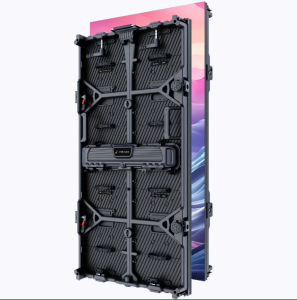
Beyond image quality, installation and maintenance directly affect the total operating cost of a project. We design our MD Series with practical engineering considerations for professional customers. The modular cabinet structure simplifies transportation, installation, and future servicing. Individual modules and power components can be maintained separately, reducing unnecessary replacement work during maintenance. This approach is especially valuable for projects requiring long-term operation with limited service interruptions. An outdoor LED screen also offers greater flexibility for cabinet dimensions and installation methods, allowing customers to adapt displays to different building structures or advertising locations. At Coblinks, our engineering team supports customized solutions according to project requirements while maintaining consistent manufacturing quality through our ISO9001 quality management system. Our in-house production process also helps us respond efficiently to customized design requests from OEM and ODM partners.
Conclusion
Choosing between LED technology and LCD billboards should be based on application requirements rather than product category alone. At Coblinks, we recommend evaluating environmental conditions, maintenance accessibility, installation flexibility, and long-term operational planning before making an investment. For projects that require larger display sizes, outdoor durability, and convenient maintenance, LED technology often provides greater adaptability. By understanding these practical differences early in the planning stage, buyers can select a display solution that better supports project performance, maintenance efficiency, and future expansion without creating unnecessary operational complexity.