
Brightness and color are two of the most important factors determining the visual performance of an LED display. While a viewer may simply see a vivid image, producing that image consistently requires careful control of LED components, pixel structure, driving technology, calibration, and display settings. At Coblinks, we consider these technical factors throughout the development and manufacturing of our LED products so that professional customers can achieve reliable visual performance in different environments.
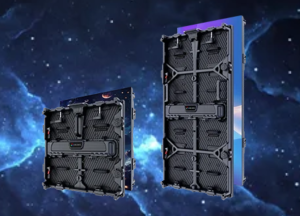
Understanding Brightness in an LED Display Panel
Brightness refers to how much light an LED display panel produces and is commonly specified in candelas per square meter or cd/m². The appropriate brightness depends heavily on the application environment. An indoor display does not normally need the same output as a screen exposed to direct sunlight.
For example, our MD Series provides different brightness levels according to its intended environment. The indoor MD models are specified at 1000 cd/m², while the outdoor MD2.9, MD3.91, and MD4.81 models are specified at 5000 cd/m². This difference allows the LED screen to remain visible under substantially different lighting conditions.
However, maximum brightness alone does not determine image quality. Excessive brightness in a dark indoor environment can be uncomfortable, while insufficient brightness outdoors can make content difficult to see. For this reason, we consider brightness together with viewing conditions, pixel pitch, contrast, and application requirements when developing display solutions.
How LED Screen Color Is Produced
An LED screen creates color through individual light-emitting components that combine red, green, and blue light. By controlling the intensity of these components, the display can reproduce a wide range of colors and visual tones.
The quality of the final image depends not only on the LEDs themselves but also on how consistently every pixel produces the intended output. Manufacturing consistency and calibration therefore play important roles. At Coblinks, our production process includes testing for brightness uniformity and color accuracy before shipment. This helps us maintain consistent visual performance across the complete display rather than treating each module as an isolated component.
The physical surface of a panel can also affect perceived color. Reflection from ambient lighting may reduce contrast and make dark areas appear less deep. Our TC Series addresses this issue with a deep black surface and anti-reflection treatment. Its 4-in-1 flip chip LED technology is designed to reduce reflection and improve contrast in bright environments, including broadcast studios, auditoria, and corporate spaces.
Why Contrast Matters Alongside Brightness
Brightness and contrast should be evaluated together when selecting an LED display panel. A display can produce high light output but still deliver an unsatisfactory image if reflected ambient light washes out darker areas.
This is why black surface technology has become increasingly important in professional LED displays. Our TC Series uses a deep black surface to minimize reflection and create deeper blacks. The result is improved visual separation between bright and dark content, particularly in environments where cameras or strong ambient lighting are present.
Our MB Series also uses true black face LEDs and matte black masks to produce deeper blacks, higher contrast, and reduced light reflection. These characteristics are particularly valuable for stage and visual production applications where image depth can directly influence the viewing experience.
The Role of Refresh Rate in Visual Quality
Although refresh rate does not directly define brightness or color, it strongly influences how an LED screen appears to the human eye and camera. A higher refresh rate can reduce visible flicker and improve camera capture, making it especially important for broadcast and professional video applications.
For instance, our MD Series specifies a refresh rate of at least 3840 Hz across its listed indoor and outdoor models. Our CL Series reaches at least 7680 Hz, while our TC Series is designed for high visual performance in camera-focused environments.
For customers using displays in broadcast or XR applications, refresh rate therefore needs to be evaluated alongside pixel pitch, brightness, color reproduction, and camera requirements rather than considered as an independent specification.
Matching LED Display Panels to the Application
The science of display performance ultimately comes down to balancing specifications with the environment. An indoor corporate display may prioritize contrast, fine pixel pitch, and comfortable brightness, while an outdoor application may require much higher brightness and stronger environmental protection.
Our MD Series illustrates this principle. Its indoor models use pixel pitches from 1.9 mm to 3.91 mm and provide 1000 cd/m² brightness, while its outdoor models range from 2.9 mm to 4.81 mm and provide 5000 cd/m². The series also uses a magnesium alloy cabinet and supports front and rear maintenance.
We use this application-driven approach because professional customers do not simply need the brightest possible LED display panel. They need a display whose brightness, color, contrast, resolution, refresh rate, structure, and maintenance characteristics work together effectively.
Our Approach to LED Display Performance
At Coblinks, we combine technological research with customized manufacturing to develop LED products for professional applications. Our product portfolio includes indoor and outdoor displays, fine pixel pitch solutions, Micro LED products, creative displays, and other specialized configurations.
As an experienced manufacturer, we understand that consistent brightness and color are essential to the value of an LED screen. That is why our production and quality control processes pay attention to brightness uniformity, color accuracy, and stability before products leave our facility.
For customers seeking customized LED solutions, we can work from specific project requirements and develop suitable product configurations. Our goal is not simply to produce a bright LED display panel, but to create a dependable display solution in which brightness, color, contrast, resolution, and reliability work together to deliver consistent visual performance.