
As we at Coblinks work with global B2B customers, we often start every project by understanding the real application environment before any display configuration is selected. In practical procurement, buyers usually compare a LED screen and a LED display board based on usage rather than specification alone. A LED screen is typically applied in large visual communication spaces such as commercial façades or stage environments, while a LED display board is more commonly used for structured information delivery in transport systems, control rooms, or industrial monitoring areas. At Coblinks, we present different product configurations designed to support these varied application needs. We focus on aligning system selection with real operational scenarios instead of isolated technical parameters.
 System Stability and Engineering Design
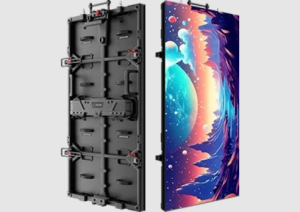 System Stability and Engineering Design
We always emphasize that a stable display system depends on both hardware structure and signal processing design. Before deployment, it is necessary to evaluate control compatibility, installation conditions, and long-term operating stability. A LED screen must maintain consistent visual output under continuous operation in different environmental conditions, while a LED display board requires stable data transmission and clear readability across distance ranges. In Coblinks engineering process, we apply structured assembly procedures and testing checks across module integration, cabinet alignment, and power system configuration. These steps ensure that each LED screen can operate under complex project environments, while each LED display board maintains predictable performance in structured information delivery scenarios. Our production flow is designed to reduce inconsistency between design expectation and real-world installation performance.
Maintenance Planning and Operational Efficiency
From a project management perspective, maintenance planning is often overlooked during early purchasing decisions, yet it directly affects long-term operational cost. We design modular structures that allow service teams to access key components without full system disassembly. A LED screen used in high-frequency environments requires efficient maintenance access to reduce downtime, while a LED display board benefits from simplified internal layout for faster troubleshooting. At Coblinks, we also consider how installation type influences maintenance frequency, especially in fixed installation and semi-outdoor applications. By optimizing structural design, both LED screen and LED display board systems can reduce service complexity and improve overall lifecycle efficiency. This approach helps system integrators and end users manage long-term operation more predictably in real deployment environments.
Conclusion
At Coblinks, we understand that purchasing decisions for LED display systems are not limited to visual performance alone. Buyers need to evaluate application scenarios, system stability, and maintenance requirements before selecting a solution. A balanced understanding of how a LED screen and a LED display board function in different environments helps avoid mismatched system design and improves long-term usability. Through structured engineering processes, modular design principles, and application-oriented configuration planning, we support customers in building display systems that align with real operational needs across diverse B2B industries and installation conditions without relying on unnecessary complexity in system selection decisions.