
Screen size and image resolution describe two different characteristics, yet they are often treated as if they were interchangeable. A compact panel can contain a remarkably dense pixel matrix, while a physically larger wall may use wider pixel spacing and still perform well at a greater viewing distance. That distinction becomes especially important in fine-pitch installations.
At Coblinks, we consider small LED display dimensions alongside pixel density, content requirements, viewing conditions, and cabinet geometry rather than assuming that physical size alone determines visual detail.
Pixel Density Matters More Than Physical Size
A display’s resolution depends on how many pixels are distributed across its available surface. Pixel pitch describes the distance between adjacent pixel centers, so reducing that spacing allows more pixels to occupy the same physical area. A compact screen with a fine pitch can consequently reproduce considerably more image detail than its dimensions might suggest.
Consider two panels with identical physical dimensions but different pixel pitches. The finer-pitch version contains more pixels across the same width and height, giving text, thin lines, and detailed graphics more sampling points. A Micro LED display takes this principle further through very small LED structures, allowing high pixel density within relatively restrained physical dimensions. In practice, this means a smaller Micro LED display can often serve applications that would otherwise require a much larger conventional display.
Viewing distance changes the practical importance of that density. A screen positioned beside a workstation may need to reproduce small interface elements clearly, while a wall viewed from across an exhibition hall has different visual requirements. Treating every installation as if it needed the same pixel pitch can create an unnecessary mismatch between technical specifications and actual use.
Resolution Depends on More Than Screen Dimensions
The term resolution usually refers to the number of pixels available horizontally and vertically, but physical size still affects how those pixels are perceived. A high-resolution image spread across a very large surface may appear less dense than the same number of pixels displayed within a smaller area. Pixel density helps explain why two screens using the same source content can produce noticeably different visual impressions.
Content itself provides another useful reference point. Fine typography, engineering drawings, dashboards, and detailed product imagery benefit from greater pixel density because small visual features occupy fewer pixels. Large icons, broad color fields, and simple motion graphics are less demanding. A small LED display intended for close inspection may consequently require a finer pitch than a much larger installation serving a distant audience.
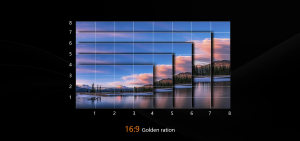
Aspect ratio also influences how efficiently a panel can reproduce modern content. Many digital sources use 16:9 layouts, so a display configuration that follows that proportion can reduce unnecessary scaling or cropping. Rather than judging a screen by its diagonal measurement alone, planners should examine pixel dimensions, aspect ratio, source resolution, and the distance at which viewers will interact with the image.
Fine-Pitch Design and Practical Applications
Fine-pitch LED technology is particularly useful in environments where limited physical space must accommodate detailed visual information. Meeting rooms, premium retail interiors, broadcast environments, monitoring areas, and digital signage can all benefit from compact high-density configurations, provided the display specifications match the content and viewing pattern.
The Coblinks CM Series illustrates how a relatively compact cabinet platform can support fine-pitch applications. Its available pixel pitches range from 0.9 mm to 1.8 mm, while the panels use a native 16:9 aspect ratio and can be configured into different screen sizes. These characteristics allow a Micro LED display-style fine-pitch application to be considered from the perspective of pixel density and layout flexibility rather than simply cabinet dimensions.
Installation geometry deserves equal attention. Smaller panels can be arranged into larger canvases, but the final pixel matrix depends on the selected pitch and the number of panels used. A carefully planned configuration can maintain consistent proportions while accommodating the available wall space. Signal processing, content scaling, brightness, and viewing distance should all be assessed before the physical layout is finalized.
Conclusion
Small physical dimensions do not automatically imply limited image detail. Pixel pitch, pixel density, aspect ratio, source resolution, and viewing distance collectively determine what an audience actually sees. A small LED display can provide highly detailed imagery when its pixel structure is appropriately matched to the application, while a larger wall may require a different balance between density and viewing distance.
At Coblinks, we approach these decisions by looking beyond cabinet size and examining how the complete visual system will be used. The result is a more practical way to evaluate fine-pitch LED technology, particularly where compact dimensions and detailed content need to coexist. Matching the display to the content, the room, and the expected viewing distance remains the most reliable way to judge whether a compact screen will meet its intended purpose.