
The first few seconds inside a building often determine how easily visitors understand where to go and what is happening around them. Reception spaces must communicate useful information without making already limited areas feel crowded. A small LED display screen can provide a flexible visual channel for greetings, schedules, directions, event notices, and brand content while occupying a carefully planned section of the interior.
At Coblinks, we look at these installations through the combined lens of visitor movement, information hierarchy, screen visibility, and the physical demands of everyday lobby use.
Making Compact Spaces More Informative
Lobby architecture rarely provides unlimited room for digital signage. Columns, reception counters, doors, seating areas, and decorative elements all compete for available wall space, so display proportions have to work within the existing environment rather than dictate it.
A compact LED installation can be positioned beside a reception desk, along a corridor, or behind a waiting area. Its effectiveness depends less on sheer size than on whether visitors can naturally see the content from their normal path through the building. A Micro LED display can be considered in applications where high pixel density is useful within a relatively restrained installation area.
Viewing distance should also shape the specification. Visitors standing close to a screen may notice pixel structure, especially around small lettering and thin graphic elements. Further away, that concern becomes less pronounced. Matching pixel pitch with the expected audience position creates a more sensible balance between image detail and physical screen dimensions.
Building a Clear Information Hierarchy
Reception messaging usually contains several levels of importance. A welcome statement might occupy the main visual area, while room numbers, meeting information, opening times, or directional instructions serve as supporting details. Putting everything at the same visual weight can make even a technically capable display difficult to read.
Typography has a particularly strong influence on usability. Short phrases, generous spacing, strong contrast, and recognizable typefaces allow people to absorb information quickly while walking through the area. A small LED display screen becomes more useful when its content is designed around the limited attention visitors typically give to lobby messaging.
Visual motion deserves similar consideration. Animated backgrounds and transitions can create energy, but excessive movement may compete with directions or time-sensitive notices. Static layouts can work well for essential information, while controlled transitions allow secondary messages to rotate without turning the entire screen into a continuously moving surface.
Selecting Content for Different Visitor Needs
Not every visitor enters a building with the same purpose. An employee may already know the location of a department, while a first-time guest may need step-by-step guidance. Reception content should accommodate these different levels of familiarity without forcing every person to process the same amount of information.
Wayfinding benefits from recognizable symbols and concise wording. A visitor searching for a conference room, for example, can respond more quickly to a clear room number paired with an arrow than to a paragraph of directions. A Micro LED display can support detailed graphics, but the availability of greater image detail should not become an excuse for adding unnecessary information.
Content can also change according to time and circumstances. Morning greetings, scheduled events, visitor instructions, emergency notices, and promotional material may each have different priorities. Digital signage provides the flexibility to update these messages without physically replacing printed materials, which is particularly useful in buildings with frequently changing schedules.
Durability in High-Traffic Interiors
Reception areas experience considerably more physical activity than many controlled indoor spaces. Visitors move luggage through entrances, furniture may be repositioned, and cleaning equipment can occasionally come close to display surfaces. Physical resilience is consequently worth considering alongside brightness, resolution, and pixel pitch.
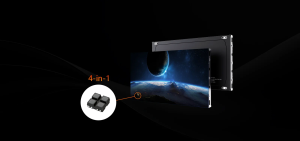
The Coblinks CM-S Series uses a 4-in-1 SMD design developed for greater resistance to collision and impact in high-traffic indoor environments. That construction is relevant to lobby applications where the display may sit close to normal visitor circulation rather than behind a physical barrier. The specification illustrates why a small LED display screen should be assessed according to its surroundings as well as its visual characteristics.
Maintenance access forms another part of the installation plan. A screen fitted into a compact architectural space still requires practical access for inspection and service. Sufficient clearance, organized cabling, and an installation layout that accounts for future maintenance can prevent a small footprint from becoming a service limitation.
Conclusion
Good lobby communication is not simply a matter of putting a screen on an available wall. Physical dimensions, viewing distance, message hierarchy, motion, durability, and maintenance all influence whether visitors can actually use the information presented to them. A Micro LED display may provide the density needed for detailed visual content, while compact configurations can help preserve valuable architectural space.
At Coblinks, we approach each small LED display screen application by considering how people move, read, and interact with information inside the building. A thoughtful combination of technology and communication design can make the reception area more useful without allowing the display itself to dominate the space.