
A customer may encounter the same brand through a social post in the morning, a retail display later in the day, and an outdoor advertisement during the evening commute. Keeping these touchpoints visually connected can make a campaign feel more coherent across physical and digital environments. Digital billboards add another layer to this process because their content can be updated, scheduled, and synchronized with broader marketing activity. At Coblinks, we view outdoor displays as part of a wider communication network, where the physical screen can reinforce messages customers have already encountered elsewhere.
Connecting Physical and Digital Touchpoints
Omnichannel marketing works best when each channel contributes to the same customer journey rather than operating as an isolated campaign. Social media may introduce a product, an online advertisement can provide additional information, and digital billboards can reinforce recognition while customers are away from their devices.
Timing is particularly useful in this model. A campaign can be arranged around product launches, seasonal promotions, store events, or limited-time offers. The outdoor message does not have to remain identical throughout the campaign; it can change as the customer’s journey progresses.
Visual consistency also deserves attention. Repeated colors, typography, imagery, and campaign themes help audiences recognize related communications across different environments. The objective is not to duplicate every piece of content, but to make each touchpoint feel connected to the same campaign.
Turning Outdoor Media into A Responsive Channel
Static advertising has limited flexibility once the printed material is installed. Digital signage changes that relationship by allowing marketers to modify messages remotely and schedule different creative assets throughout the day.
A shopping district, for example, might display brand awareness content during high-traffic periods and switch to location-specific promotions later. Such scheduling can make physical advertising more closely aligned with online campaigns, particularly if both channels respond to the same promotional calendar.
The effectiveness of LED billboard advertising still depends on content discipline. Outdoor audiences may only have a few seconds to process a message, so the display should communicate one recognizable idea rather than attempting to reproduce an entire digital advertisement. Concise headlines and strong visual hierarchy usually translate better to large public screens.
Designing for Weather and Continuous Operation
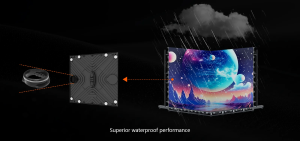
Outdoor omnichannel campaigns that rely on LED billboard advertising often run for extended periods, making environmental performance an important part of media planning. Rain, moisture, dust, temperature changes, and repeated exposure to outdoor conditions can affect the practical operation of a display.
The MB Series provides one example of an outdoor-oriented construction detail. Its patented circular waterproof ring, developed by Coblinks, is designed to distribute pressure evenly around the sealing area and reduce opportunities for rainwater intrusion. This type of structural detail illustrates why waterproof performance should be considered at the cabinet level rather than judged solely from general marketing descriptions.
Brightness and contrast also need to be evaluated according to the installation environment. A screen facing direct sunlight may require a different configuration from one installed beneath a covered shopping arcade. Viewing angle, reflections, mounting position, and surrounding architecture all influence how a campaign appears to real audiences.
Coordinating Content Across Multiple Channels
Omnichannel campaigns become more useful when their content follows a deliberate hierarchy. The outdoor display can introduce a short message, while a QR code, website, social account, or nearby retail location provides the next step for people who want more information.
Content teams should also consider the difference between physical and digital viewing behavior. Someone scrolling through a phone can pause, reread, or tap a link, whereas a pedestrian or driver usually has a much shorter exposure window. The outdoor version of a campaign should be redesigned for that context instead of simply being enlarged from an existing digital asset.
Performance measurement can connect the channels further. Campaign teams may compare website traffic, search activity, store visits, QR interactions, or promotional responses during different advertising periods. Such data can help identify whether the physical touchpoint is contributing to broader campaign activity.
Building a Consistent Customer Journey
The strongest omnichannel campaigns do not treat every channel as identical. Each environment has a different role, audience behavior, and amount of available attention. Outdoor media can create broad awareness, mobile channels can provide deeper information, and physical stores can support direct interaction.
Digital billboards can also support location-based storytelling. A national campaign might use a common visual identity while adapting individual messages to local stores, events, weather conditions, or regional promotions. This approach preserves brand recognition without making every location feel disconnected from its surroundings.
Technical planning matters behind the creative work. Content scheduling, network connectivity, display maintenance, brightness management, and media updates all affect how reliably campaigns appear in public spaces. A marketing strategy can be sophisticated on paper yet lose impact if the physical communication layer is difficult to manage.
Conclusion
Omnichannel marketing is ultimately about continuity rather than repetition. Customers may encounter a campaign through several environments, and each interaction should contribute something useful to the overall journey. Outdoor displays can provide visibility at moments when people are away from their screens, while digital channels offer the depth and interaction that physical advertising cannot provide on its own.
We at Coblinks see LED billboard advertising as one component of this connected marketing framework. Properly planned, a physical display can reinforce digital campaigns, adapt to different locations, and remain relevant throughout a promotional cycle. The real opportunity comes from coordinating content, timing, technology, and measurement so that every customer touchpoint has a clear purpose.