
Digital advertising has shifted from static panels toward visual formats that can respond to time, location, audience behavior, and campaign objectives. A large LED display screen gives advertisers a broad canvas for video, motion graphics, live information, and changing promotional messages without requiring a new physical display for every campaign. At Coblinks, we see this shift as more than an increase in screen size; it reflects a change in how brands use physical spaces to deliver content that can adapt throughout the day.
Moving Beyond Static Outdoor Advertising
Traditional printed advertising communicates a fixed message until the physical material is replaced. Digital displays introduce a different operating model, allowing multiple campaigns to share the same advertising surface and enabling content schedules to change according to time or event conditions.
Location remains an important part of the equation. A display beside a busy road may prioritize short, high-impact messages that can be understood within seconds, while a screen in a commercial district may support longer promotional sequences because pedestrians have more time to engage with the content.
Screen size should also correspond with the environment. A very large surface placed in a narrow street can overwhelm surrounding architecture, while a smaller display may lose visual impact in an expansive outdoor setting. Advertising effectiveness depends on the relationship between display dimensions, viewing distance, traffic flow, and surrounding visual noise.
Improving Visibility in Challenging Environments
Outdoor advertising faces conditions that are difficult to control. Sunlight changes throughout the day, reflections can reduce perceived contrast, and weather can affect both the display surface and surrounding infrastructure. Brightness is important, but it should be assessed alongside contrast, viewing angle, and environmental conditions.
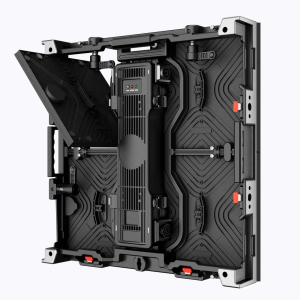
Our Coblinks MB-H Series offers one example of a display approach designed for demanding visual environments. Its compatibility with inverted flip-chip GOB technology supports high-definition images, high contrast, and surface protection, while the inverted chip structure reduces light obstruction associated with conventional support brackets. This can help maintain clearer imagery under direct midday sunlight, where glare can otherwise make darker content difficult to perceive.
Color consistency also matters across large advertising surfaces. If different sections of one installation display noticeably different tones, a campaign can appear visually fragmented. Calibration, processing, module consistency, and content preparation all contribute to maintaining a coherent image across the viewing area.
Making Content More Responsive
One of digital advertising’s major advantages is the ability to change content without replacing the physical display. A retailer might promote morning offers before switching to lunchtime messaging, while an entertainment venue could update its content according to the day’s schedule.
A Stage LED Screen is normally associated with live entertainment, yet the underlying display principles also demonstrate how digital surfaces can handle dynamic visual information. High refresh performance, suitable processing, and accurate signal transmission become important whenever video content contains fast movement, camera footage, or detailed animation.
Scheduling can also improve relevance. Advertisers can align content with business hours, public events, traffic patterns, or seasonal campaigns. Such flexibility makes digital signage more responsive than a static campaign, although the content still needs to be concise enough for the audience’s available viewing time.
Balancing Scale with Content Design
Larger advertising surfaces on a Stage LED Screen create opportunities for stronger visual compositions, but simply enlarging an existing advertisement does not automatically improve communication. Typography, image resolution, spacing, and visual hierarchy should be reconsidered for the actual physical dimensions of the screen.
Viewing distance has a direct effect on readability. Text that works on a desktop display may become difficult to understand from a roadside position. Designers should use appropriate font sizes, strong contrast, and a clear hierarchy so that the main message remains recognizable before the viewer moves away.
Motion requires similar restraint. Complex animations may look impressive in a controlled environment but become difficult to interpret when viewers have only a few seconds to see them. Effective digital advertising often gives the primary message enough visual stability to be understood before introducing secondary information.
Integrating Displays into Urban Spaces
A large LED display screen does not exist independently from its surroundings. Building façades, retail architecture, pedestrian routes, road layouts, and neighboring signs all affect how an advertisement is perceived. Successful installations consider the physical environment as part of the communication system.
Screen orientation can influence visibility just as much as dimensions. A display facing directly toward a primary traffic route may require different content timing from one viewed diagonally by pedestrians. Viewing angles, mounting height, and surrounding obstructions should be evaluated before the final placement is established.
Long-term operation also involves practical considerations such as maintenance access, power requirements, structural support, and environmental protection. These factors may remain invisible to the audience, yet they have a direct effect on how consistently the advertising surface can operate over time.
Conclusion
Digital advertising works best when technology serves the communication objective rather than becoming the objective itself. Screen dimensions, brightness, contrast, viewing distance, content design, placement, and scheduling all influence whether a message can be noticed and understood in a busy physical environment. Scale creates possibilities, but thoughtful planning determines how those possibilities translate into useful communication.
We at Coblinks approach the Stage LED Screen concept with the same broader view: display technology has to work within its real environment, not merely perform well on a specification sheet. A carefully planned large LED display screen can give advertisers greater flexibility in content and scheduling while becoming part of the visual character of a public space. The result is a more adaptable advertising medium that can evolve alongside changing campaigns and audience conditions.