
For outdoor display projects, brightness alone does not determine whether the content remains clear throughout the day. Environmental lighting, installation angle, pixel configuration, and maintenance conditions all influence viewing performance. As Coblinks, we help B2B customers evaluate these practical factors before project deployment rather than relying on a single specification. A properly designed outdoor LED screen should provide balanced image quality in different weather conditions while remaining easy to install and maintain. During engineering discussions, we also encourage customers to consider future servicing, operating costs, and application scenarios, because these elements directly affect long-term performance after installation.
Optimizing Display Performance Through Practical Engineering
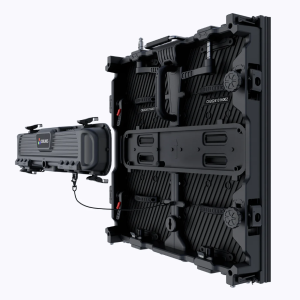
Improving visibility begins with selecting a display that matches the installation environment. Direct sunlight, viewing distance, surrounding buildings, and operating hours all affect brightness requirements. Instead of simply increasing luminance, we recommend balancing brightness with contrast, refresh performance, and image consistency. This approach helps maintain comfortable viewing while reducing unnecessary energy consumption. At Coblinks, our MD series is developed for outdoor fixed installation applications where stable operation and convenient maintenance are important. The cabinet structure supports practical installation requirements, while the modular design helps simplify future servicing. A well-designed outdoor LED screen should also maintain stable image quality through reliable cabinet alignment, uniform module assembly, and controlled manufacturing processes. These details help reduce visible gaps between cabinets and support consistent visual performance across the entire display surface.
Supporting Long Term Reliability After Installation
Visibility is closely related to long-term system condition. Dust accumulation, damaged modules, unstable power distribution, or poor cabinet sealing can gradually reduce display quality even when the original specifications remain unchanged. For this reason, routine inspection should become part of every maintenance schedule. We recommend checking cabinet connections, cleaning the display surface appropriately, and replacing damaged components promptly to maintain stable operation. Our engineering team also pays attention to structural strength because outdoor installations may experience strong wind, heavy rain, or changing temperatures. Based on different project requirements, we provide suitable product configurations instead of applying the same solution to every application. In addition, our manufacturing process follows ISO9001 quality management requirements, with every production stage under internal control. Combined with our OEM and ODM experience, this allows us to support customers requiring customized outdoor LED screen solutions for different commercial projects while maintaining consistent production quality and delivery efficiency.
Conclusion
Selecting an outdoor display is not simply about choosing the highest brightness level. Buyers should evaluate installation conditions, maintenance accessibility, structural reliability, and manufacturing quality together before making a purchasing decision. At Coblinks, we focus on practical engineering and flexible customization to help B2B customers build display systems that match real project requirements. By combining careful product selection, appropriate maintenance planning, and reliable manufacturing processes, outdoor displays can maintain clear visibility and stable operation throughout their service life while supporting a wide range of commercial and public applications.