
High pixel density can make an LED wall visually impressive, but technical specifications only become meaningful once they are matched with the room, content, and expected viewing behavior. Micro LED display technology involves more than selecting the smallest available pixel pitch; factors such as image processing, brightness, cabinet construction, service access, and viewing distance also shape the final result. At Coblinks, we assess these elements together because a technically advanced display still needs to fit the practical conditions of its installation.
Start with Pixel Pitch and Viewing Distance
Pixel pitch is one of the first specifications worth examining because it determines the spacing between adjacent pixels. A smaller pitch places more pixels into a fixed area, which can make fine text, detailed graphics, and facial features appear more refined at shorter viewing distances.
The correct pitch depends on how people interact with the screen. A boardroom display may be inspected from only a few meters away, while a large corporate lobby may be viewed primarily from a greater distance. Selecting an unnecessarily fine pitch can add cost without providing a meaningful visual benefit if viewers rarely approach the screen closely.
Content resolution should be considered at the same time. A high-density panel cannot create source detail that does not exist in the original signal. Presentations, camera feeds, data dashboards, and high-resolution promotional imagery each place different demands on the display, so the intended content should influence the pixel-pitch decision.
Examine Image Quality Beyond Resolution
Resolution describes the number of pixels available, but it does not tell the entire story of perceived image quality. Grayscale processing, color consistency, refresh rate, contrast, and image-processing hardware can all affect how smoothly visual information appears.
Fine tonal transitions are particularly revealing in close-viewing environments. A display showing studio footage or detailed corporate graphics may need to reproduce subtle changes in shadow and color without obvious steps. The visual result depends on how the LED components, receiving cards, processor, and source material work together.
A Micro LED display can provide a dense pixel arrangement suitable for detailed imagery, yet density should not become the only evaluation criterion. A display with an appropriate pitch, well-matched processing system, and suitable brightness may provide a more useful result than one selected solely because it has the smallest numerical specification.
Consider Physical Design and Installation
Installation constraints often become apparent only after the display has been selected. Wall depth, cabinet dimensions, cable routing, ventilation, structural support, and front or rear service requirements can all influence how easily the system integrates with an interior.
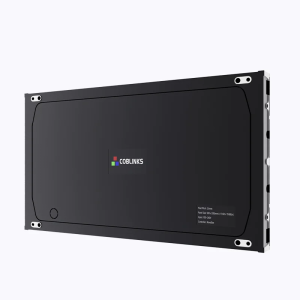
The CM Series is designed for premium indoor fixed installations with a 41 mm slim profile and pixel pitches ranging from 0.9 mm to 1.8 mm. Its positioning across corporate lobbies, broadcast studios, and command centers reflects applications where visual precision and a restrained physical profile matter. These characteristics show why micro LED display technology should be assessed as an installation system rather than simply as a collection of image specifications.
Maintenance deserves similar attention. Even a well-integrated LED wall requires access to modules, power components, receiving cards, and signal connections. A compact installation can look elegant while still creating unnecessary service difficulties if maintenance pathways were not considered during the planning stage.
Match Performance with the Operating Environment
Brightness requirements vary substantially between indoor applications. A brightly illuminated lobby may require a different output level from a dark broadcast studio, while a command center may operate for many hours with relatively consistent ambient lighting. Excessive brightness can affect viewing comfort, whereas insufficient output may reduce perceived contrast.
The audience’s position matters as well. People seated across a conference table may view the same content from several horizontal angles, so viewing-angle consistency becomes relevant. A display used mainly from one central position may have different priorities from a collaborative screen intended for an entire room.
Long operating periods also make thermal behavior, power consumption, component accessibility, and system stability important considerations. At Coblinks, we look beyond the initial visual impression and consider how the display is expected to perform throughout its operating cycle. A Micro LED display should make sense not only during installation but also during everyday use and future maintenance.
Conclusion
Selecting advanced LED technology involves more judgment than comparing pixel-pitch numbers. Viewing distance establishes the visual requirement, content determines how much detail matters, while cabinet design and maintenance considerations shape the practical installation. Micro LED display technology can support highly detailed indoor applications, but its value depends on how well the specification matches the environment and operating purpose.
At Coblinks, we use that broader perspective when evaluating display configurations, considering image performance, physical integration, service access, and audience behavior as connected parts of one system. A thoughtful specification process makes the technology easier to apply effectively rather than treating technical density as the sole measure of suitability.