
Stage design is increasingly moving beyond rectangular screens toward complete visual environments that interact with architecture, lighting and movement. For stage designers, this shift creates new technical requirements. Displays may need to curve around structures, create unusual visual boundaries or adapt to different stage layouts while maintaining consistent image quality. This is where a flexible LED display can give designers more freedom to create curved and irregular screen layouts..
At Coblinks, we develop professional LED display solutions for stage, rental and creative applications. We work with professional customers, including overseas rental companies, by manufacturing and supplying LED display products and supporting customized requirements. Our goal is to give stage professionals more options when a standard flat LED wall cannot achieve the intended visual effect.
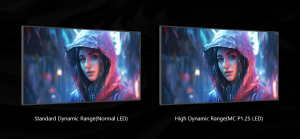
Flexible LED Display Panels Give Stage Designers More Freedom
Traditional LED cabinets are generally designed for flat surfaces. While they are effective for conventional stage backdrops, they can become restrictive when a production requires curved or creative structures. Flexible LED display panels can help designers move beyond straight lines and create visual surfaces that better follow the concept of a performance.
Our MC Series is a multi-size indoor LED display designed for commercial and creative applications. It provides cabinet dimensions of 500 × 1000 mm, 500 × 500 mm, 500 × 250 mm and 250 × 500 mm. These sizes can be mixed and matched, providing additional freedom when designing customized display configurations. The series also supports concave, convex and rotated configurations.
For stage designers, this means the display can be considered as part of the overall stage structure rather than simply a rectangular background. Curved sections can help create stronger visual depth, frame performers or connect the LED surface with other elements of the set.
Choosing The Right Display For Stage Requirements
Creative flexibility is only one consideration. Stage designers and rental companies also need to evaluate pixel pitch, viewing distance, brightness, refresh rate and viewing angle before selecting flexible LED display panels.
The MC Series is available in pixel pitches from 1.25 mm to 3.91 mm. Its refresh rate is at least 3840 Hz, while the horizontal and vertical viewing angles are both 160 degrees. Depending on the selected model, brightness ranges from 600 to 800 cd/m².
These specifications allow professional buyers to select configurations according to the application. A finer pixel pitch can be appropriate when audiences are positioned relatively close to the screen, while a larger pixel pitch may be suitable for stages viewed from greater distances.
The MC Series also uses die-casting aluminum cabinets and supports AC110 to AC220 input voltage. Average power consumption varies by model from 145 to 195 W/m², while maximum power consumption ranges from 435 to 585 W/m².
Understanding these specifications before production and installation helps stage teams balance creative requirements with practical operating considerations.
Curved Screens Can Strengthen Immersive Stage Design
A flexible LED display becomes particularly valuable when the screen itself needs to contribute to the visual identity of a performance. Instead of treating the LED wall as a passive content surface, designers can use its geometry to reinforce the movement and atmosphere of the show.
Curved configurations can create panoramic backgrounds, wraparound visual effects and distinctive stage focal points. They can also help integrate screens into creative structures where a conventional flat cabinet would leave unwanted gaps or require additional framing.
Content design should follow the physical structure as well. Flowing animations, panoramic scenes and motion graphics can emphasize the curvature, while carefully planned content mapping helps maintain visual continuity across the display.
This approach is useful for concerts, theatrical productions, corporate events and other professional stage environments where visual presentation is an important part of the audience experience.
Manufacturing Expertise Matters For Custom Stage Displays
Once a stage design moves beyond standard screen layouts, manufacturing capability becomes part of the solution. Precise dimensions, structural requirements and customized configurations all need to work together during production and installation. A capable manufacturing partner can therefore help turn creative screen concepts into workable LED structures.
Coblinks was established in 2017 and operates a 5,000 square meter production facility. According to our company information, our technical team represents 15 percent of our workforce, and we provide ODM services to international markets including Europe, America, Japan and Korea. Our manufacturing and R&D capabilities allow us to develop customized LED display solutions for professional customers.
Our solutions cover rental, fixed installation and creative applications, and our website specifically identifies stage and rental as one of our application areas. For overseas rental companies, our role is to manufacture and supply the LED display products they need rather than provide event rental services ourselves.
Building Better Stage Solutions With Coblinks
Flexible LED display panels give stage designers more room to experiment with shape, structure and visual depth. For productions that call for something beyond a conventional flat screen, the ability to adapt the display to the stage can make a noticeable difference. Coblinks provides flexible LED display solutions for stage, rental and creative applications, helping professional customers explore these possibilities through practical screen configurations.